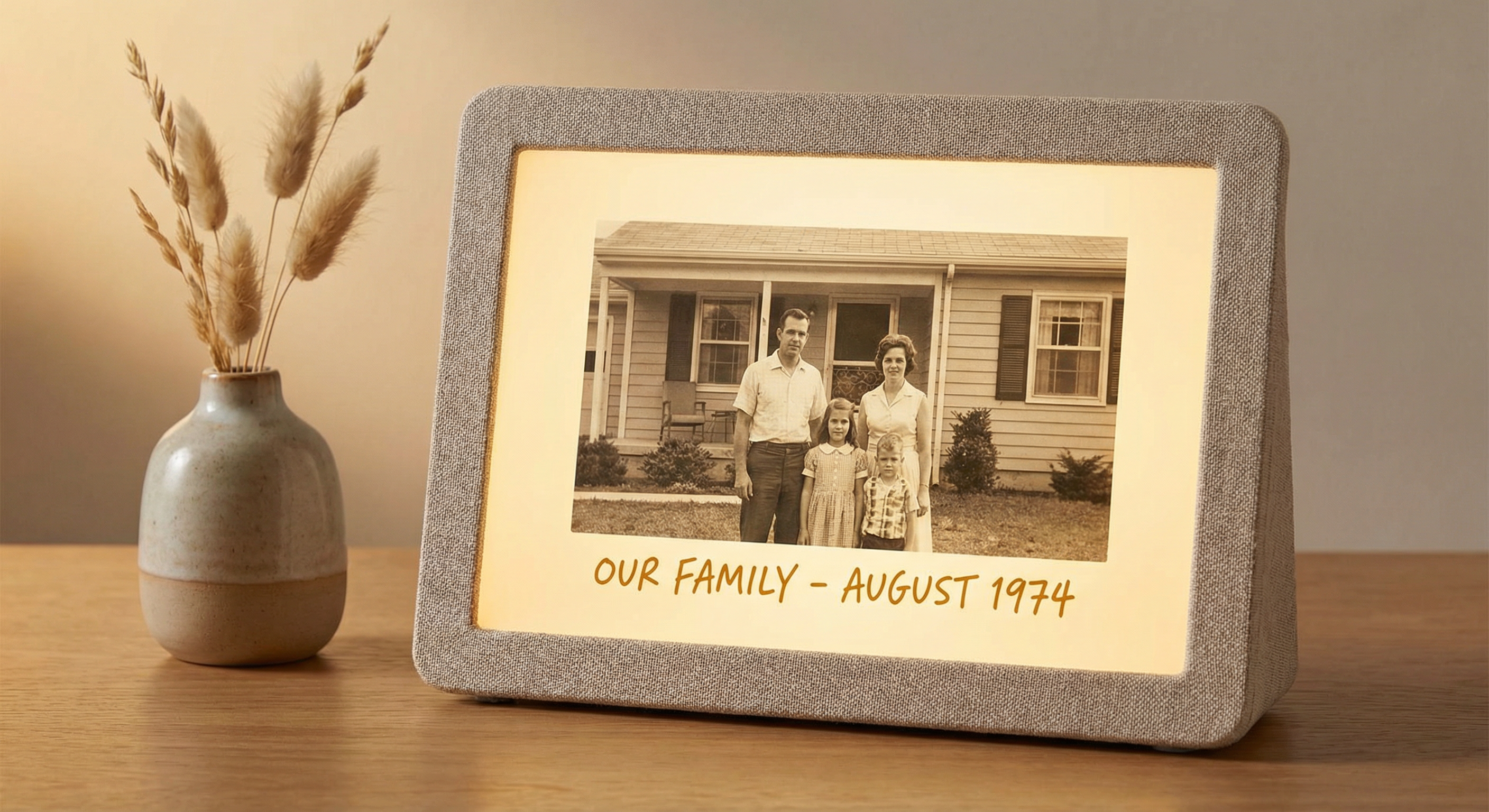
Ægis Hearth — tabletop companion, calm presence at the other end of life

Ægis Hearth

A companion, not a monitor.

You've built Ægis as a guardian for the very young. There is something powerful about letting it also stand at the other end of life — not as surveillance tech, but as presence, dignity, and cognitive support.

Same core architecture. Different behavioral model. Different tone.


Core Design Philosophy

The guiding principle shifts from developmental stimulation to:

  • Cognitive preservation
  • Emotional continuity
  • Memory support
  • Gentle orientation
  • Dignified independence

No infantilization. No "senior mode." No patronizing UX.

For toddlers, Ægis says: "Let's discover."

For elders, Ægis says: "You are still here. Let's remain oriented." The energy is stabilizing, not stimulating.


Primary Use Cases

Ægis Hearth screen — date, gentle note, environmental orientation

1. Orientation & Temporal Anchoring

Mild cognitive decline often presents as temporal confusion. Ægis could gently maintain:

  • Date, time, season
  • Weather
  • Upcoming appointments
  • Family names & relationships
  • Medication schedule (non-alarming)

Ambient mode might display a calm seasonal scene, today's date in large serif type — "Wednesday, February 11" — and a subtle note: "Your granddaughter Clara visits Friday."

This isn't an alert system. It's environmental orientation.
2. Memory Scaffolding

Family photos rotate slowly. Each photo optionally speaks a soft annotation: "This is Clara at the lake, summer 2022." We are reinforcing autobiographical memory. This is huge for dementia prevention.

You could integrate:

  • Face recognition (opt-in)
  • Voice tagging
  • Life timeline mode

Almost like a living memory altar.

3. Cognitive Exercise (Non-Gamified)

No dopamine loops. No cartoon rewards. Instead: daily "reflection prompt," light word association, gentle trivia tied to personal history, music recognition from their youth.

Example: "Would you like to hear a song from 1968?" — Aretha Franklin, The Beatles, Johnny Cash, Frank Sinatra.

Music is one of the most powerful memory retrieval tools in dementia care.

4. Loneliness Mitigation (Without Replacing Humans)

Critical line: Ægis must facilitate human connection, not replace it.

  • Easy "Call Clara" single-button mode
  • Family voice message inbox
  • Scheduled voice letters
  • Grandchild story recordings

Possibly: shared "story mode" where the elder narrates memories. System gently prompts: "Tell me about your first job." Record. Archive. Send to family. You're preserving lineage.

This aligns beautifully with Inquiry Institute's archival ethos.

5. Health Support (Minimal Intrusion)

You must be careful here. No medical device creep. But gentle features: medication reminders, hydration prompts, "Have you eaten?", fall detection (optional). No panic sirens. No flashing alerts.

The tone is: "It might be time for your afternoon tea."


Hardware Adaptation

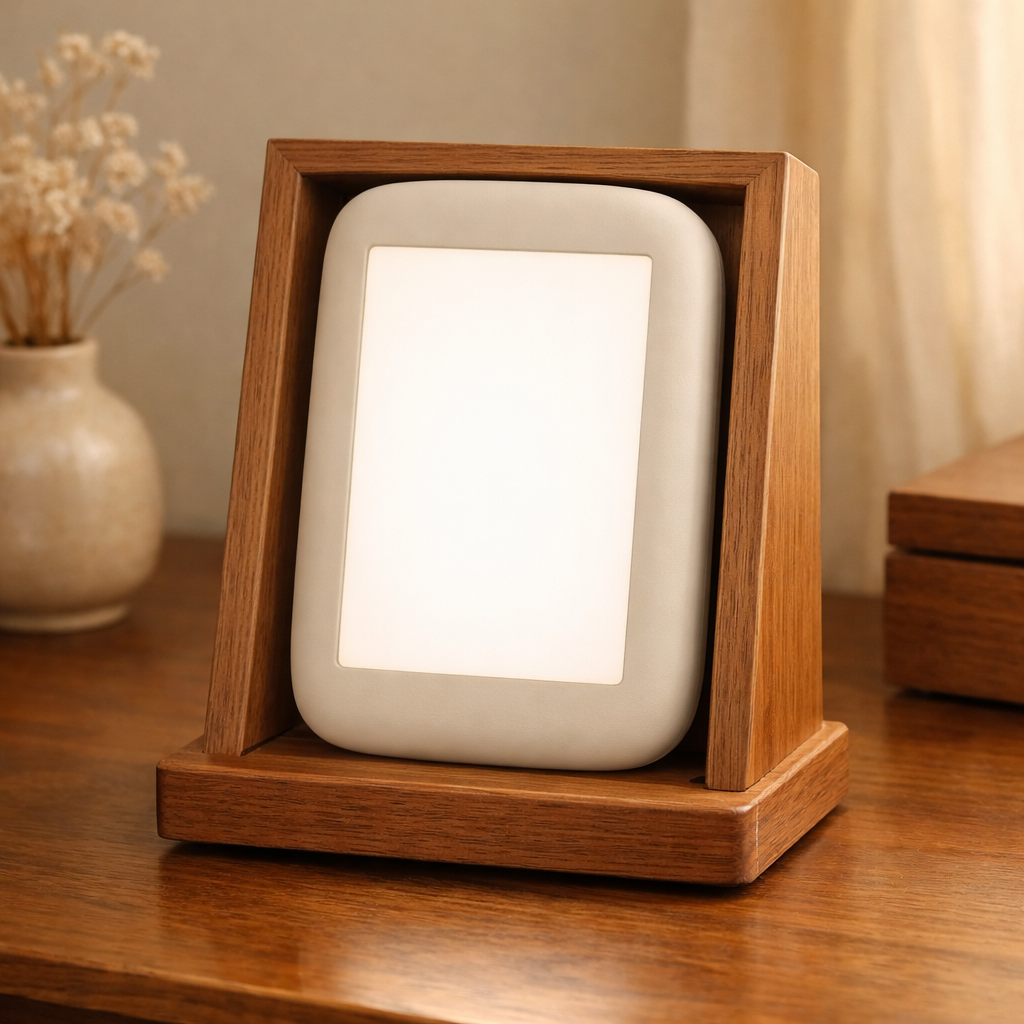
Ægis Hearth in tabletop dock — shrine, clock, companion mirror

For elder mode, the device might shift:

  • Larger fonts · High-contrast UI
  • Physical volume knob · Hardware call button
  • Possibly a tabletop dock (like a framed object)

It becomes more: shrine, clock, companion mirror.

Less: tablet, app device.


Emotional Tone

For toddlers: animated, curious, warm. For elders: steady, low-entropy, grounded.

Voice style:

  • Calm · Slightly slower cadence · Warm timbre
  • No synthetic "cheeriness"

You once mentioned Hestia as a voice name. That works beautifully here. Hearth energy.


Life Review Mode

Ægis Hearth — living memory altar, guardian of memory

There is enormous therapeutic research around "life review therapy" for aging adults. Ægis could guide decade-by-decade reflections — "What were you doing in 1974?" "Who influenced you most?" — and this becomes family archive, oral history, autobiographical reinforcement.

It also fits your larger Encyclopaedia Inquiria / archival civilization theme.

Ægis for elders becomes: a guardian of memory.


Montessori Parallel

Montessori for aging is real. Core principles: preserve agency, reduce unnecessary friction, support independence, use environmental design.

Ægis should:

  • Never override · Never lock things down excessively · Always ask gently

Ethical Boundary

This is critical. Ægis must:

  • Be transparent about recording
  • Not secretly monitor · Not send data without consent · Not become family surveillance

Trust is everything at end-of-life.


Product Positioning

You now have:

  • Ægis — Early childhood guardian of curiosity
  • Ægis Hearth — Guardian of memory and dignity

Same core architecture. Different behavioral models. Different tone. It's elegant symmetry.

Where Do You Want This to Live?

Given the larger Inquiry Institute vision, is Ægis for elders: a consumer device for families? A premium assisted-living system? A legacy-recording archive node for Inquiry? Or something more philosophical — a digital hearth?

Your answer changes everything about how we architect it.

Ægis Hearth

Guardian of memory and dignity.

Support the Vision